

When peaches, nectarines, or plums arrive at the packing house after harvest, plant health treatments are not over: in fact, for some pathogens, they have only just begun. Geotrichum candidum —responsible for sour rot— is one of the most problematic fungi in stone fruit postharvest, capable of ruining entire lots in a matter of days if conditions are favorable.
Unlike other pathogens that infect the fruit in the field, Geotrichum acts mainly within the postharvest handling chain: cold storage rooms, packing lines, and transport. Its colonization speed and the ease with which it spreads from fruit to fruit make it an especially dangerous adversary in high-production seasons like those in the Lleida plain and the Huesca strip.
Understanding how it acts, under which conditions it proliferates, and which tools exist to control it is essential to protect product quality and reduce economic losses.
What is Geotrichum and how does it infect fruit?
Geotrichum candidum is a fungus that lives naturally in the soil, in decaying organic matter, and in the water of rivers and irrigation ditches. Under normal conditions it is a saprophytic organism, but when it finds ripe fruit —especially with wounds or bruises— it becomes a highly destructive opportunistic pathogen.
The infection cycle follows a very clear pattern:
- Source of inoculum: field soil, washing water in the packing line, machinery surfaces, or poorly sanitized crates.
- Entry point: friction wounds during harvest, bumps during transport, or simply the peduncular area and lenticels.
- Favorable conditions: temperatures between 20 and 30 °C, high relative humidity, and fruit at an advanced stage of ripeness.
Once established, the mycelium grows at a remarkable speed and produces arthroconidia that disperse easily through direct contact between fruits or through the washing water.
Symptoms: how to recognize sour rot
Early detection is key. Symptoms of Geotrichum in stone fruit are quite characteristic once you know what to look for:
- Watery lesions: the fruit skin shows soft, pale, or slightly whitish areas with a wet appearance. The pulp liquefies rapidly beneath the surface.
- Sour odor: the fermentation produced by the fungus generates a very pronounced sour odor, distinct from other rots such as those caused by Monilinia or Botrytis.
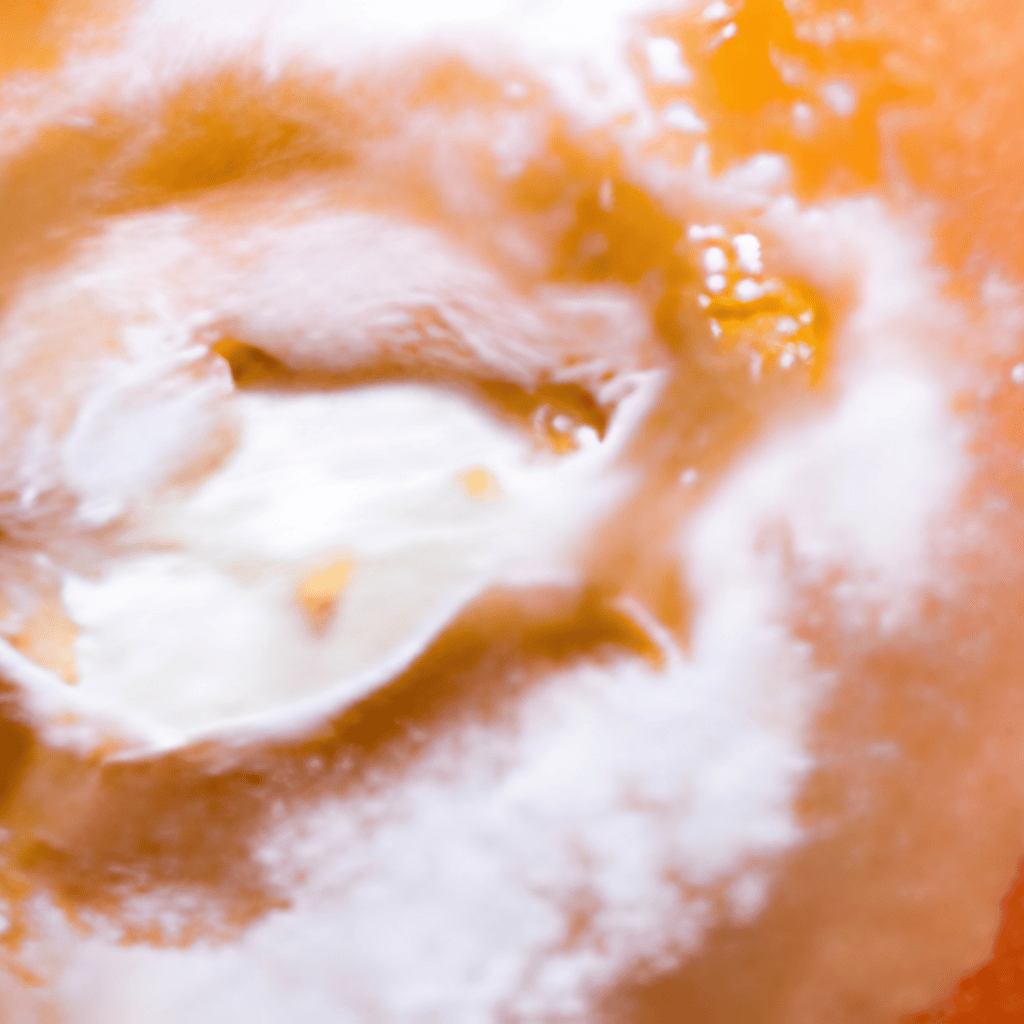
- White mycelial growth: under high humidity conditions, a creamy white cottony mass appears over the infected area.
- Contact transmission (“nesting”): healthy fruits touching an infected one can develop symptoms within hours, which creates the typical “nests” of rot in cold storage rooms.
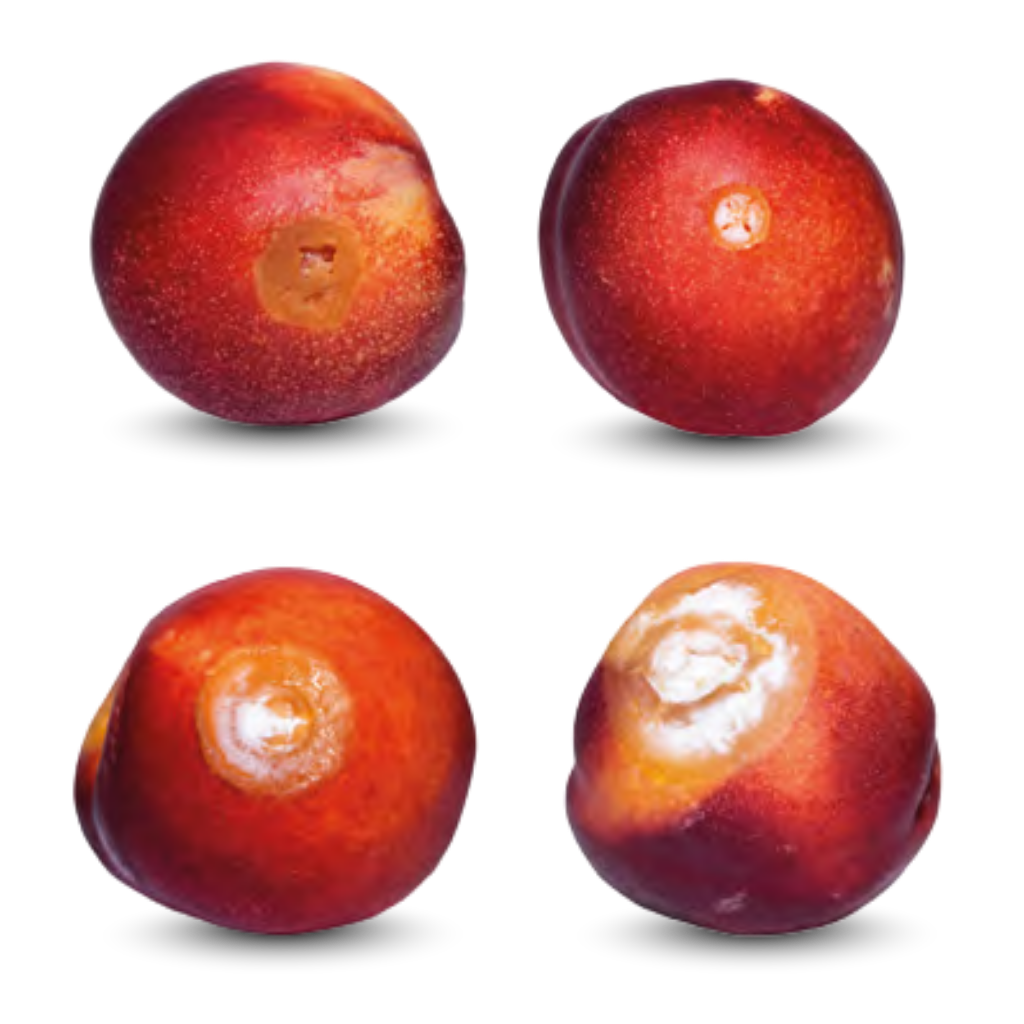
It is important not to confuse Geotrichum with Monilinia (which produces mummified fruits and concentric rings of tan-colored conidia) or with Rhizopus (which presents a much more abundant gray-black mycelium). When in doubt, a laboratory diagnosis confirms the causal agent and helps adjust the control strategy.
Risk factors in the stone fruit season
Not all fruit carries the same risk. There are conditions that significantly increase the probability of issues with Geotrichum:
In the field:
- Harvesting under extreme heat conditions (high pulp temperature at the time of picking).
- Overripe fruit or fruit with mechanical damage from hail, wind, or friction.
- Soils with a high inoculum load due to previous infections or accumulation of organic debris.
In postharvest:
- Delays between harvest and entry into the cold storage room (every hour counts at 30 °C).
- Washing water with a high organic load.
- Cold rooms, bins, or packing machinery with poor sanitization between seasons.
- Mixing fruit with different stages of ripeness on the same pallet.
In seasons where the harvest is concentrated into a few days —which is common when temperatures soar in July— logistical pressure can lead to overlooking precooling times, creating the perfect scenario for Geotrichum to break out.
Control strategy: field, cold storage, and packing line
The control of Geotrichum must be approached in an integrated manner, as no single measure is sufficient on its own.
Preventive measures in the field
- Adjusted harvest schedule: avoid picking overripe fruit. Working with objective ripeness indexes (penetrometry, refractometric index) helps make the decision at the optimal time.
- Careful handling: minimize bumps and friction during harvest and transport to the packing house. Wounds are the primary entry point for the fungus.
- Field hygiene: remove fallen fruit and organic debris that act as an inoculum reservoir.
Precooling and cold chain
Cold is the most effective tool against Geotrichum. Below 5 °C, the growth of the fungus slows down considerably (it can grow even at temperatures close to 0 °C, albeit very slowly). For this reason, maintaining an uninterrupted cold chain —especially during loading and unloading— is just as important as the initial precooling.
The objective is to reduce the pulp temperature to this range as soon as possible after harvest —ideally in less than 6 hours— and keep it stable throughout storage and transport.
Sanitization of the packing house and machinery
- Cleaning and disinfection of cold rooms, bins, belts, and rollers before the start of the season.
- Frequent changing or filtering of the washing water on the packing line, along with the use of authorized disinfecting agents.
- Periodic inspection of water distribution systems to avoid dead zones with accumulation of organic matter.
Postharvest fungicide treatments
There are authorized active ingredients for the postharvest treatment of stone fruit against fungi of the genus Geotrichum and other common pathogens such as Monilinia or Penicillium. The most relevant groups include:
- Fludioxonil: contact fungicide with a good safety profile.
- Pyrimethanil: with systemic action, it complements contact products well.
- Potassium and sodium bicarbonate: a low environmental impact alternative, with variable efficacy depending on the inoculum pressure.
The choice of active ingredient and dosage must always be adjusted to current regulations and the Maximum Residue Limits (MRLs) required by the destination market. At Agroborges we can provide guidance on the available options and the pre-harvest intervals applicable to each case. However, it must be kept in mind that these phytosanitary treatments are not 100% effective on their own, and the best control strategy always stems from preventive actions and treatments carried out directly in the field.
Geotrichum control checklist in postharvest
Before and during the season, these points should be checked:
- Has the complete cleaning and disinfection of the cold storage room been carried out before the start of the season?
- Is the washing water changed, filtered, or treated with the appropriate frequency?
- Is the pulp temperature reduced to less than 5 °C in less than 6 hours after harvest?
- Is there a specific protocol when an outbreak is detected?
- Are the postharvest fungicides used authorized and applied at the correct dosages?
Do you have doubts about the postharvest treatment of your harvest?
At Agroborges we have experience in the phytosanitary management of stone fruit both in the field and in postharvest. If you want to know which products are available for this season, how to apply them correctly, or how to optimize the packing house sanitization protocol, our technical team is at your disposal.
Visit us at our store, call us, or check our website. We work with you so that your fruit reaches the market in the best possible conditions.
